
MAGA's Civil War Is Worse Than They Realize. The Dam Is Bursting.
PDS Published 03/26/2026
-
Another dam just burst in the MAGA civil war, and this time it’s between Candice Owens and FBI Director Kash Patel’s girlfriend, the country singer Alexis Wilkins.
Now y’all, you’re not gonna believe this [sarcasm]: the thing they’re fighting over is anti-Semitism.
Specifically the allegation that Wilkins is an Israeli intelligence agent who’s using her relationship to Patel to manipulate the Trump administration. [B roll]
Something which she denied on Megyn Kelly’s show last summer when the claim first started bubbling up. [Lead B roll into clip]
[Clip, 07:11 - 07:18] Caption: [Megyn Kelly:] “Are you a spy for any government?” [Alexis Wilkins:] “Definitely not. That is a firm no on that front.”
But Owens? She’s not buying it. [Lead B roll into clip]
[Clip, 38:13 - 38:37]
Right, and the reason she’s hedging there is because Wilkins has in fact sued a couple of people for defamation over this.
First, the conservative podcaster and former FBI agent Kyle Seraphin, who claimed she’s a former Mossad agent. [Headline]
[Clip, will add]
Then the right-wing influencer Elijah Schaffer [Shay-fer], who reposted the same claim. [Headline]
And finally the failed GOP Senate candidate Sam Parker, who accused her of being a “mouthpiece for PragerU and the zionist agenda.” [Headline]
[Clip, 39:36 - 39:42]
But Wilkins didn’t stop there, because this week she dumped a crazy 13-post thread on X announcing:
“I’ve spent the last few months learning to build programs to utilize publicly available information to prove that this is way bigger than me. This is about creating chaos in the Republican Party. It's about the organized effort to lose Republicans the midterms and subvert President Trump's agenda.” [Post]
And her big “finding”? According to her, “A foreign-linked influence network has been running coordinated operations against the Trump administration for 22 months.” [Same post]
With her providing a bunch of data supposedly proving that this is happening, and she names names. [Post]
Claiming that Trump’s former National Security Director Michael Flynn “is the anchor of a digital infrastructure that has been repeatedly activated — at every major Republican fracture point — over 22 months of documented data.” [Post]
She also goes after an organization called Catholics for Catholics that he’s a part of, and then says Russian state media amplified the honeypot claims about her. [Post]
She then claims that all the same accounts in this supposed influence network “immediately activated” to boost Candice Owens’s conspiracy theories about the Charlie Kirk assassination and Israel. [Post]
And she connects even more dots, pointing out that right after National Counter-terrorism Center Director Joe Kent resigned, Catholics for Catholics announced they’d have him at their event. [Post]
Which she says was followed by Tucker Carlson interviewing him, and then Kent appearing on stage next to Flynn and Owens. [Same post]
Now in response to all this, you had Flynn posting a meme of two cats reading smartphones with the caption “Me and my so called ‘flynn network’ hard at work... don’t lose your sense of humor folks, stuff getting deep.”
And then apparently not seeing the irony, you had the queen conspiracy theorist herself making fun of Wilkins for being so conspiracy-brained. [Lead B roll into clip]
But also, this spat between Wilkins and Owens, it’s not an isolated thing.
Right, the Republican Party’s really beginning to notice that the next generation of conservatives are sliding toward the Candace Owens end of the spectrum.
You might remember that leaked group chat from October with Young Republican leaders in several states apparently joking (though maybe not joking) about gas chambers, slavery, rape, black people being monkeys, loving Hitler and hating the Jews. [Scroll through top messages]
Or when it was revealed that the Miami Republican Party made a group chat for students, where within three weeks, there were over 400 mentions of the N-word, as well as misogynistic, homophobic and anti-Semitic slurs, and talk about “Nazi heaven.” [First two paragraphs]
With those leaks leading to the resignation of a Turning Point USA chapter president who wrote, “I would def not marry a Jew.” [Headline]
Meanwhile, the University of Florida’s College Republicans chapter was disbanded after its members were accused of doing a Nazi salute. [Headline]
And this month, the College Republicans of America appointed a longtime fan of Nick Fuentes as their political director. [Headline]
Right, he’s made comments many consider anti-Semitic, he promoted Fuentes’s “white boy summer” tour in 2021, he was a “special guest” at Fuentes’s conference the next year, and he has a channel on Cozy.Tv, a platform founded by Fuentes and Alex Jones.
Now the Republican old guard, like Ted Cruz for example, have watched all this with dismay.
[Clip, 02:35 - 02:52]
And echoing that, California’s Republican Party circulated a memo last month warning that Fuentes fans were making their way into party positions and running for office, requiring a conscious effort to keep them out. [Quote, find “memo warning”]
But others are less concerned, arguing instead that these are just fringe weirdos trying to make themselves seem bigger than they reall are.
And there’s some evidence to back that up; right, at TPUSA’s conference late last year, for example, An official straw poll found that 87% of attendees viewed Israel as an ally. [Quote, find “87”]
And there was a study published in December that suggested Fuentes’s rise to prominence was artificially fueled by foreign bot farms. [Title page]
So you have the founding president of the foundation behind the annual National Conservatism Conference telling The Washington Post:
“The migration of our politics online has created a perverse incentive structure. If you voice anti-Israel and antisemitic views, you get an instant reward in the form of clicks, likes and follows. This fuels the fallacy that the activist base of the party shares these views.” [Quote]
-
But we may be on the edge of a different social media and tech landscape altogether - with parents and advocates celebrating the cracks forming in Big Tech’s shield of legal protections.
Right, we’re specifically talking about juries in 2 separate states dealing major blows to both Meta and YouTube this week. []
Yesterday, we saw a jury in LA find both companies liable for harms to children using their services.
The plaintiff in this case goes by KGM and her initial case included all the big social media companies - TikTok, Snap, YouTube, and Meta. []
With TikTok and Snap settling before the case went to trial.
But KGM argued that Meta and YouTube’s platform features were designed intentionally to be addictive, especially to young users.
Specifically blaming them for the depression and anxiety she’s faced as an adult - saying the issues developed because of her compulsive use of their platforms as a child. []
And this is FAR from the only case to make that accusation - in fact, thousands of families have filed similar lawsuits and this was chosen as one of a handful of bellwether trials.
Right, a test to see how both sides of the argument play out before a jury. []
And this one seems to have worked out pretty alright - with the jury awarding KGM $6 million in damages.
With Meta on the hook for the biggest chunk of that.
Then in New Mexico, we saw a jury order Meta to pay $375 million in damages for failing to protect young users from child predators. []
And finding the company responsible for misleading consumers about the safety of its platforms.
As you can imagine, Meta and Google - which owns YouTube - didn’t take too kindly to these rulings.
With both companies promising to appeal the case in LA and Meta’s statement argued that teen mental health is, quote, "profoundly complex and cannot be linked to a single app.” []
While Google’s spokesman responded by saying,
"This case misunderstands YouTube, which is a responsibly built streaming platform, not a social media site.” []
Now, these are definitely different from previous cases against social media platforms.
Right, because they focused on deliberate design choices and product liability, they were able to skirt around Section 230.
Which, if you don’t know, is a chunk of the 1996 Communications Decency Act that generally exempts internet companies from liability for the material users post on their platforms. []
Which makes it a major hurdle for previous lawsuits focusing on how the platforms actually distribute content.
Right, these companies have been able to successfully argue for years that any harm potentially caused by their platforms is just a byproduct.
Or the unintentional and inevitable consequences of broader societal issues or bad actors taking advantage of safeguards. []
And any cases they have lost, they can pretty easily pay the penalty as the cost of doing business and move on.
Right, a few million dollars is a rounding error in the eyes of these multi-billion dollar companies.
Which is why the real victory here isn’t necessarily the companies cutting a check but the very real chance at change.
With tech watchdogs, parents, and children’s advocates saying things like,
“The era of Big Tech invincibility is over. After years of gaslighting from companies like Google and Meta, new evidence and testimony have pulled back the curtain and validated the harms young people and parents have been telling the world about for years.” []
And,
“For the parents whose children died as a result of social media harms, today’s verdict is a huge step toward truth, justice, and accountability.” []
And you’ve even got people comparing this to the cases that targeted Big Tobacco - saying this could be the beginning of a reckoning across the social media landscape.
Especially because, like I said, there are thousands of cases like KGM’s waiting in the wings.
With one assistant professor of law at the University of Houston Law Center saying,
“For the first time, courts have held social media platforms accountable for how their product design can harm users,”
“This is a new legal territory that could reshape an industry long shielded by Section 230. Platforms will have to rethink their focus on engagement at any cost, which has outlived itself.” []
And Jim Steyer, the chief executive of Common Sense Media, said that these rulings show that the courts are willing to align with state legislatures and foreign governments to reshape Silicon Valley.
Right, multiple states have enacted various social media laws aimed at protecting children or launched investigations into platforms.
And while lawmakers at the federal level have been slow to act, the same isn’t true for other countries.
Right, both the European Union and individual countries within Europe have taken more aggressive actions to crack down on social media usage among younger kids.
In addition to more robust laws in general, EU regulators have launched numerous investigations, issuing a preliminary decision last month against TikTok for its “addictive design,” saying it threatens the well-being of users, including minors.
And just today, you had officials announcing that they have launched an investigation into Snap for violations of a 2022 law that forced social media companies to police illicit content more aggressively.
And specifically, the EU is alleging that Snap’s age-verification system is ineffective at preventing children under 13 from using the app.
With regulators also claiming that the algorithm regularly misclassifies users aged 13-17 as adults and then directs them toward explicit content, exposes them to dangerous contacts for sexual exploitation, and provides access to illegal products.
Though amidst all the excitement and declarations of accountability from the U.S. rulings, it’s important to note that we don’t know for sure what the real outcome or the ripple effects of this are going to be.
And we probably won’t for years and years.
Right, there is still a very long way to go and there will have to be a lot more than just these 2 cases to see real change.
It’s going to take court rulings, state legislatures, Congress, and even international pressure like we’re seeing in the EU to truly make a difference.
But this feels like a step in the right direction.
And with that, I’m going to pass the question off to you - what are your thoughts on this whole situation?
Let me know what you’re thinking in those comments down below.
And some people have already sounded that alarm - saying these rulings could be teeing up a serious blow to Section 230, privacy, and free speech.
Right, with the Foundation for Individual Rights and Expression saying,
“If media companies must worry about liability whenever their expressive outputs are thought to be “harmful,” the universe of available content would be reduced to the safest, blandest, and least engaging stuff imaginable. And when it comes to social media, that affects what you are allowed to post, too.” []
Not to mention a potential goldrush for personal injury attorneys.
With an R Street Institute policy analyst saying,
"Cases like this will likely unleash a trial lawyer bonanza via a much broader wave of (mostly frivolous) lawsuits.”
"Every tort lawyer in America is probably thinking about ripping down their 'Been in a Crash?' billboards right now and replacing them with 'Addicted to the Internet?' signs." []
Which was echoed by the Wall Street Journal editorial board,
"Using a novel product liability theory to shake down companies won't help young people and isn't a good way to make law.” []
And many others have pushed back on the argument that “social media is addictive.”
Saying these platforms aren’t products like cigarettes or alcohol.
Even making the comparison to similar concerns about comic books back in the 50s.

Go to Proton Mail and sign up for Proton Mail's awesome service today.
-
The White House is threatening to “unleash hell” on Iran;
the Pentagon is getting ready to deliver one massive "final blow.”;
and Donald Trump continues to insist that Iran is the one “begging” for a deal.
And—depending on whether he’s telling the truth—we may be inching toward an end to this war or a brand new chapter with even graver consequences.
And in the meantime, what’s happening with this conflict is already shaping what’s going on with another: Russia’s war in Ukraine.
But let’s start with the situation between the US and Iran—because Trump says they’re talking, Iran says they’re not, and the truth may be somewhere in the middle.
Right, the administration just sent Iran a 15-point plan to end the war.
Which reportedly called on the country to dismantle its nuclear sites, halt uranium enrichment, suspend its ballistic missile programme, curb support for its regional allies, and fully reopen the Strait of Hormuz
But Iran publicly rejected the plan and laid out its own conditions for ending the war—including an end to sanctions, compensation for damages, a wider cease-fire for the region that protects Hezbollah, and recognition of Iranian sovereignty over the Strait of Hormuz.
With Iran’s foreign minister telling state media that Iran had no intention to hold talks with the US.
But despite that, you then had the US and Israel temporarily removing him and Iran’s speaker of Parliament from their hit list—even as an Israeli airstrike allegedly killed the naval commander who played a key role in shutting down the Strait of Hormuz.
And you’ve also reportedly had some Iranian officials speaking to the New York Times and suggesting they’re open to negotiations—and are even considering meeting with Trump administration officials in Pakistan over the next week.
But they want more than a temporary pause to the fighting—which they fear Israel and the US would only use as an opportunity to build up their forces before launching strikes again. []
And while they’re apparently willing to discuss limitations on nuclear enrichment, they’re not open to limitations on the country’s missile program.
They also won’t reopen the Strait of Hormuz without a peace deal in place and, if it is opened, they still may be hoping to charge ships passing through. []
So the available information might suggest the gap between the two sides is still massive but there’s also a real desire to find a diplomatic solution.
And the slightest chance of a diplomatic breakthrough has apparently led Israeli Prime Minister Bibi Netanyahu to direct his country’s military to increase strikes on Iran’s arms industry as much as possible.
With the order apparently coming after his government got a copy of Trump’s 15-point plan.
Which was reportedly “detailed enough to alarm Netanyahu, his staff and Israel’s defense chiefs”—who felt it didn’t go far enough to keep Iran’s nuclear program or missile capabilities in check. []
But the US is also preparing to ramp it up—with White House Press Secretary Karoline Leavit claiming yesterday that talks were ongoing and "productive” but also saying that if Iran doesn’t make a deal the US will hit Iran “harder than they have ever been hit before”—adding:
“President Trump does not bluff and he is prepared to unleash hell.”
And with that, you had Trump following up on social media this morning—writing:
“The Iranian negotiators are very different and “strange.” They are “begging” us to make a deal, which they should be doing since they have been militarily obliterated, with zero chance of a comeback, and yet they publicly state that they are only “looking at our proposal.” WRONG!!!”
“They better get serious soon, before it is too late, because once that happens, there is NO TURNING BACK, and it won’t be pretty!”
And of course, it’s clear that the US is at least positioning itself to follow through on Trump’s threats, with thousands more troops on their way to the region, and a $200 billion funding request potentially soon on the way to Congress.
And on top of that, the Pentagon is reportedly developing military options for a "final blow" that could involve the use of ground forces and a massive bombing campaign—including:
invading or blockading Kharg Island—which is Iran's main oil export hub;
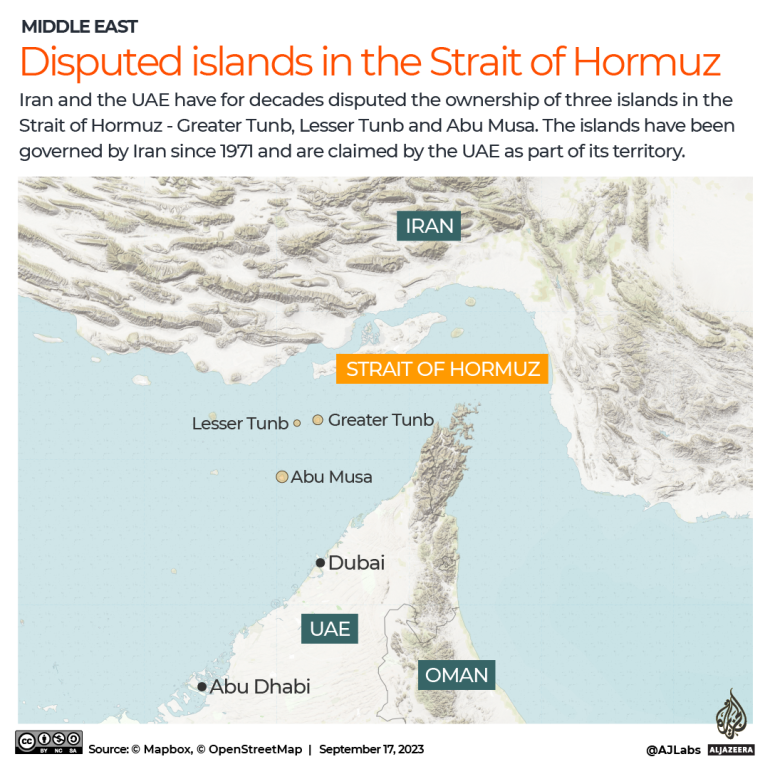
taking over other strategic islands that help Iran maintain control over the Strait;
or blocking or seizing ships that are exporting Iranian oil on the eastern side of the Strait. []
With some American officials reportedly of the mind that an adequate display of force would give the US more leverage in peace talks or at least give Trump something to point to and declare victory. []
And Iran’s Speaker of Parliament suggested they were aware of the Pentagon’s preparations in a post on X yesterday—writing:
“Iran's enemies, with the support of one of the regional countries, are preparing to occupy one of the Iranian islands.”
“All enemy movements are under the full surveillance of our armed forces. If they step out of line, all the vital infrastructure of that regional country will, without restriction, become the target of relentless attacks.”
And with that, it seems likely he was referring to an island near the western entrance to the strait controlled by Iran but claimed by the UAE—which is likely the “regional country” he mentions.
Right, because along with Saudi Arabia, the UAE has reportedly pushed Trump to continue the war and even considered getting directly involved.
But according to a report from the Wall Street Journal, what Trump may be most concerned with is ending this war quickly.
The problem is that Iran also has a say in how the war ends.
And the options being discussed could actually drag the fighting out and make it worse instead of pushing things toward a clear finish.
And with that, people close to Trump have reportedly warned that it’s hard to guess what he might do next—saying he has often gone back and forth between diplomacy and escalation.
Although, notably, some of his allies are apparently encouraging him to escalate, saying regime change in Iran could be legacy-defining. []
And he is reportedly willing to put boots on the ground but is reluctant to do so at least partly because it could undermine his goal of bringing the conflict to a swift end.
He’s also concerned that the number of troops killed or injured will rise if the war continues—with so far 13 Americans having been killed and nearly 300 wounded. []
And with that, cracks may be starting to show among Republicans when it comes to support for this war.
With several leaving classified Pentagon briefings yesterday expressing frustration at the lack of detailed information they’re getting—especially related to the possibility of sending ground troops into Iran.
With one lawmaker who saying boots on the ground may be a “red line” for some —adding:
“That’s the time that they’re going to abandon the effort. There was concern that that is not being ruled out.” []
And with that, you also had Republican Congresswoman Nancy Mace saying she “will not support troops on the ground in Iran, even more so after this briefing” —and adding:
"The justifications presented to the American public for the war in Iran were not the same military objectives we were briefed on today in the House Armed Services Committee. This gap is deeply troubling. The longer this war continues, the faster it will lose the support of Congress and the American people.”
We’ve also seen frustration being expressed by European leaders—with Germany’s defense minister saying at a meeting of the G7 today:
“To make it crystal clear, this war is a catastrophe for the world’s economies.”
“European partners and Germany highlighted from the beginning that we have not been consulted before. Nobody asked us before. It’s not our war.” []
But in a cabinet meeting today Trump appeared focused on projecting confidence—with him repeatedly insisting IRan is desperate for a deal, not him:
“They're begging to make a deal, not me. They’re begging to make a deal. ”
“and anybody that saw what was happening over there would understand why they want to make a deal." (5:01-5:10)
"They’re begging to work out a deal. I don’t know if we’ll be able to do that, I don’t know if we’re willing to do that. They should have done that four weeks ago. They should have done it two years ago, or they should have done it when we first came into office." (5:25-5:40)
“They are begging to make a deal.” 12:44-12:46
He also revealed what this mysterious “gift” he said he had received from Iran was—claiming it had allowed several oil tankers to pass through the Strait of Hormuz to show it was serious about negotiating.
And speaking of oil tankers, you had British Prime Minister Keir Starmer authorizing the UK’s military to board and detain Russian “shadow fleet” tankers in British waters today.
Joining other countries—including France, Belgium, and Sweden—who have taken similar measures.
But I mention it in a story about Iran because Starmer specifically claimed his decision was driven at least partly by the fact that Russia is benefiting from rising oil prices linked to the Iran war. []
Which is especially the case since the US partially lifted sanctions on Russian oil exports—helping bring its daily oil revenues to their highest levels in years.
And this is not the only way these two conflicts are connected.
The Pentagon is now also considering whether to divert weapons originally intended for Ukraine to the Middle East.
Including some of the systems Ukraine needs most, like high-end missile interceptors—the same equipment the US has already been redirecting from Europe and East Asia to reinforce its forces in the Middle East, raising concerns there as well. []
And Russia may also be trying to use the war in Iran to undermine US support for Ukraine in other ways too.
With Zelensky claiming Russia offered to stop sharing military intelligence with Iran if the US cuts off intelligence support to Ukraine in return.
And in the meantime, with so much attention on Iran, Putin is only ramping up his attacks on the country— launching a new spring offensive that has involved the largest single-day drone assault since Russia launched its full-scale invasion more than four years ago.
And, of course, both of these wars have had massive economic impacts as well.
But while conflict may drive up prices, the affordability crisis has been a long time in the making. [TRANSITION INTO VICTOR’S]
-
And affordability might be about to be an even bigger issue as economists sound the alarm:
Politicians are about to make life more expensive for you because their approach to the problem is fundamentally flawed.
And that’s because they’re listening to big business instead of the experts who actually know what they’re doing.
Since affordability has become a buzzword in our political landscape, both sides of the aisle have offered their own solutions. []
Some have suggested putting a cap on credit card interest rates and extending mortgages to 50-year terms while axing taxes on tips, car-loan interest and overtime pay. [] []
Others have been pushing for freezing rent and utility rates and putting caps on grocery prices, while also tossing around ideas to suspend seniors’ property taxes and the gas tax – which sounds pretty enticing right now. [] []
Both sides have even found some common ground in forcing some institutional investors out of the housingmarket.
And all of this, again, is in the name of making life cheaper for you.
However, it’s all left economists scared shitless.
Scott Lincicome (Lence-i-come, pronunciation :21), vice president of general economics at the Libertarian Cato Institute, said, “You can come up with a laundry list of these things that are very attractive to normal humans but that repulse economists.” []
Politicians may write the economic policies, but the ones who actually know the science behind it say that their solutions “often cause other problems.” []
The catch-22 here is that politicians are at the beck and call of their voters, often leading us to economic solutions that Lence-i-come says “are eternally seductive, because they communicate to a political audience that you are stopping the price increases.” []
However, these solutions can also lead to other issues that have the opposite effect in the long run.
For example, when you look at things like grocery prices, Josh Bivens, chief economist of the liberal Economic Policy Institute, says, “If you try to push down grocery prices, you could actually start reducing supply. People might start going out of business, or grocery stores close.” []
Another example is the push for rent control we’ve seen from people like Zohran Mamdani.
Economists warn that this could actually make landlords reluctant to invest in their properties, either out of retaliation or genuine financial strain, leading to degraded housing and less livable spaces. [] []. []
And these concerns exist for almost all of the ways politicians have offered to help with affordability.
Reports say freezing seniors’ propertytaxes could lead to higher tax bills for everyone else.
Capping credit card interest rates could make it harder for low-income consumers to be approved for credit cards.
But we, as average citizens, don’t always see these risks because politicians only present the most instantly gratifying parts of these policies to save their seats in office.
And economists are saying that the issues in these policies are all because Congress is working from the wrong end of the problem.
They suggest that – and brace yourself for this – we need more income. I know. God forbid.
Experts say that the affordability issues would be better solved if we focused on things like reducing unemployment and strengthening unions. [] []
The idea is that we should be adapting to a problem that’s here to stay rather than trying to pretend we can snuff it out.
Jason Furman, a Harvard economist who led President Barack Obama’s Council of Economic Advisers, said, “I think we are seeing more bad economic ideas than before…because people are trying to solve a problem that doesn’t have a solution.” []
And that’s tough to hear, as so many Americans have become one-issue voters, only concerned with the economy.
But what those Americans may not realize is that they may be fighting a losing battle if we don’t start to see more of a separation between our politicians and big business.
I mean, cash has been sitting high on Capitol Hill for as long as anyone can remember.
And with this president in particular, reports show that “even using the most conservative estimates, the Trumps have made almost 4 billion dollars ‘off of the presidency,’ in just about a year.” [][]
Tariffs have been weaponized, causingbusinesses to nosedive. []
He’s led unprecedented interventions in companies like Intel. []
And we’ve seen his billionaire friends in high places with an oligarch-levelinfluence on our government.
Neera Tanden (Near-uh, pronunciation :08), a top Biden adviser and head of the Center for American Progress, said, “I haven’t seen, in my lifetime, a president use the powers of the federal government to interfere with the market more than Trump.” []
But, hey, that’s the cost of capitalism, right?
We can’t have big business funding campaign trails and cuddling up to politicians if we expect to see economics centered around the people.
We also can’t have politicians placating the public with quick-fix economic solutions that just plant another problem for us to find five years later.
And as foreign conflicts continue to drive up prices for American citizens and people continue to search high and low for any job at all, let alone one with a livable wage, you have to wonder, at what point is this affordability crisis going to come to a head?
And what will that look like when we show up to vote in the fall and in 2028?

![[]](https://www.usatoday.com/gcdn/presto/2022/03/07/USAT/b2ae022e-e96f-4382-8e5a-25def0922e37-GTY_1382515360.jpg?crop=4818,2711,x0,y0&width=3200&height=1801&format=pjpg&auto=webp)
![[]](https://images.axios.com/4mjYEB_dePqnGxsORsmrbQu1clw=/0x0:5712x3213/1920x1080/2026/03/24/1774384560472.jpeg)



![[]](https://thestreetspirit.org/wp-content/uploads/2023/09/IMG_9742-copy-1-1024x768.jpg)
![[]](https://i.guim.co.uk/img/media/921fdab0694e79dd026a4af4a78d9bcfe186d4ec/0_36_4096_2459/master/4096.jpg?width=1200&height=900&quality=85&auto=format&fit=crop&s=f2d3b5e34ba8abe412db26751d6fb2c5)
![[]](https://media.9news.com/assets/KUSA/images/f805a089-63c9-47a5-a1de-00ba4125b636/f805a089-63c9-47a5-a1de-00ba4125b636_1920x1080.jpg)

