PDS Published 03/23/2026
-
Trump TACO’d out of his latest threat to “obliterate” Iran’s energy infrastructure if it didn’t reopen the Strait of Hormuz.
But he only pushed the deadline back by five days—and if he does decide to follow though the consequences could be catastrophic.
And it’s not clear we can count on another TACO—especially as he may only be getting more desperate with each unsuccessful effort to clean up the mess he created.
He has repeatedly demanded that American allies he spent most of his presidency threatening and berating risk the lives of their own troops by escorting commercial ships through the strait.
With him then responding to their repeated refusal to do so by continuing to threaten and berate them—including on Friday when you had him writing on social media:
"“Without the U.S.A., NATO IS A PAPER TIGER!
“...they complain about the high oil prices they are forced to pay, but don’t want to help open the Strait of Hormuz, a simple military maneuver that is the single reason for the high oil prices.”
“So easy for them to do, with so little risk. COWARDS, and we will REMEMBER!”
But, of course, it’s not so easy.
If it was, why would the US need NATO’s help? And in fact Trump has claimed more than once that the US didn’t need NATO’s help—even while continuing to complain about not getting it.
In the meantime, to try and keep a handle on rising prices, he’s been handing out gifts to US adversaries—including the one he started this war against.
Right, this weekend, his administration lifted sanction on some 140 million barrels of Iranian oil already loaded onto vessels.
With this coming a week after the lifting of sanctions on Russian oil already at sea, and a couple of days after the easing of sanctions on companies in Belarus—a key Russian ally often called Europe’s last dictatorship.
Which is why you have people like Brett Erickson, a consultant specializing in financial crimes and sanctions, telling the Washington Post:
“Two countries that we’ve spent years sanctioning are now the direct beneficiaries of a conflict the United States chose to start.”
“The United States has spent years building sanctions architecture specifically designed to constrict Russia and Iran. Within three weeks of this conflict starting, we’re tearing it to shreds.” []
But with all that, you had Trump claiming on Friday that his administration was “getting very close to meeting [its] objectives as [it considers] winding down [its] great Military efforts in the Middle East with respect to the Terrorist Regime of Iran”—adding:
“The Hormuz Strait will have to be guarded and policed, as necessary, by other Nations who use it — The United States does not!”
“If asked, we will help these Countries in their Hormuz efforts, but it shouldn’t be necessary once Iran’s threat is eradicated. Importantly, it will be an easy Military Operation for them.”
And with that, while Trump claimed the US was “winding down” its operations in the region, the military was actually ramping up attacks against Iranian drones and naval vessels in its latest effort to unblock the Strait of Hormuz.
Not to mention thousands more troops on their way, possibly to take part in a ground operation aimed at that objective.
And a day later he only added to the confusion by writing in another post:
“If Iran doesn’t FULLY OPEN, WITHOUT THREAT, the Strait of Hormuz, within 48 HOURS from this exact point in time, the United States of America will hit and obliterate their various POWER PLANTS, STARTING WITH THE BIGGEST ONE FIRST!”
And notably, this came as strikes on energy infrastructure had already accelerated last week after Israel launched a major attack on the Iranian section of the largest natural gas field in the world.
Which led Iran to retaliate against other oil and gas facilities in the Gulf States—including the world's largest liquefied natural gas production facility in Qatar—further threatening global energy supplies and driving up fuel prices.
Trump then threatened “to blow up the entirety” of that gas field if Iran attacked Qatar again—with him also claiming the US “knew nothing about” the initial Israeli strike ahead of time even though multiple outlets reported otherwise.
And Iran’s foreign minister threatened to do even more damage if Trump followed through—saying his country would show “ZERO restraint if our infrastructures are struck again.”
And in response to Trump’s latest threat Iranian officials have struck a similar tone.
With a military spokesman vowing that his country would strike infrastructure used by Israel, the US, and American allies—including “fuel, energy, information technology and desalination infrastructure.”[]
And adding that the Strait of Hormuz would be “completely closed” until any damaged Iranian power plants were rebuilt.[]
You also had Iran’s Speaker of Parliament warning that “infrastructure and energy and oil facilities across the region will be considered legitimate targets and will be destroyed irreversibly, and oil prices will rise for a long time.” []
With him also threatening to target buyers of US Treasury bonds—saying that “financial entities” financing the American military budget were legitimate targets.
And with all that, Iran spent the weekend showing that it hasn’t been defeated yet.
Right, attacks continued against American allies in the Gulf—with Saudi Arabia, Kuwait, Bahrain and the United Arab Emirates all reporting that they intercepted drone and missile attacks over the weekend.
And we also saw Iranian strikes increasingly testing the limits of Israel’s air defense systems.
On Friday, for example, a missile fragment hit near holy sites in Jerusalem’s Old City and injured several people (BROLL).
And on Saturday, two Iranian missiles struck cities in southern Israel and wounded around 180 people—including a twelve-year-old boy and a five-year-old girl who were both reported to be in serious condition.
Iranian state-linked media said the strikes were carried out in response to alleged attacks by the US and Israel on nuclear facilities in Iran.
And with that, these strikes on Israel? They hit near the country’s main nuclear research facility and reactor—which is meant to be one of the best-protected sites in the country (BROLL, BROLL).
So the fact that two missiles made it through has raised questions about how effective Israel’s air defenses will continue to be—especially the longer this war drags on.
Right, because so far, the military claims to have intercepted more than 90 percent of Iran’s ballistic missiles.
And that may be largely thanks to something called the Arrow 3—an antiballistic missile system developed by Israel and the US.
But Israeli media reported that the Arrow 3 wasn’t deployed against the missiles that injured so many people this weekend. []
And there are concerns that the military is starting to more aggressively conserve its stockpile of these interceptors—which are extremely costly and time consuming to produce.
The military has denied recent reports that it was running out of missile interceptors—saying it had “prepared for prolonged combat.” []
But you also had a former former commander of Israel’s air and missile defense forces telling the New York Times:
“It is not a bottomless barrel.”
“When we intercept, we also have to think of the next day’s battle.” []
And with that, a high-ranking Israeli defense official reportedly traveled to Washington this month to ask for more interceptors and munitions—and it’s not clear whether the US agreed to provide more. []
In the meantime, though, another way Iran has been trying to get around Israel’s air defenses is through the use of what are known as cluster munitions.
Which have warheads that burst and scatter into smaller bombs—meaning even if they’re intercepted some of these smaller bombs can escape and continue their descent.
And Israel can try to intercept those too but it’s hard to hit them all in time—which we seemingly saw yesterday when an Iranian missile dropped cluster munitions in central Israel and injured fifteen people (BROLL)
And with that, the use of cluster munitions, especially in populated areas may violate the laws of war due to the potential for indiscriminate harm to civilians.
The US and Israel have condemned Iran’s use of the weapons for that reason.
And since 2008, more than 100 countries have signed an international agreement to ban them.
Though, notably, nobody involved in this conflict—including the US and Israel as well as Iran—has signed the agreement—nor have major powers like Russia, China and India. []
The US has actually used cluster munitions in Afghanistan and other conflicts—as well as supplied the weapons to Ukraine despite concerns over how they would be used.
Russia has also used cluster munitions during the war there, and Israel has used them in past wars—including in Lebanon in 2002, and allegedly more recently as well.
In the current war, it has also been accused of using something called “white phosphorus” in residential areas of Lebanon—which could similarly be illegal due to the potential for indiscriminate civilian harm.
And on that note, Israeli invasion and assault on Lebanon has killed over 1,000 and displaced more than a million according to the Lebanese government.
With the IDF Chief of Staff saying on Sunday that its campaign had “only just begun” as the country’s defense minister revealed that he had ordered the military to step up its destruction of bridges and houses in the southern part of the country (BROLL).
With him suggesting that they would follow methods deployed in Gaza during Israel’s two-year war with Hamas. []
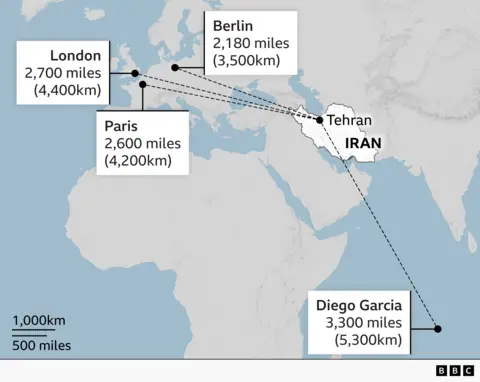
But to stick with Iran for now, in addition to attacking Israel, it is also believed to have fired two missiles at a joint American-British military base in the Indian Ocean—with one missile failing mid-flight and the other getting shot down by an American warship.
And the reason this may be absolutely gamechanging is because this place is more than 3,000 miles from Tehran.
And Iran had previously said it had intentionally kept the range of its missiles below 1,250 miles “because [it didn’t] want to be felt as a threat by anybody else in the world.”
And if that was a lie it means many more European countries and the US military bases in them are potential targets.
Now, with all that, it’s not clear how far such an attack could truly reach since neither missile reached its target.
And it’s not even clear if the missiles carried a payload—which would’ve let them travel further by weighing less.
And Iran has denied that it fired the missiles—accusing the Israeli government of staging it as a “false flag” operation.
So this doesn’t really back up claims from Trump or others in his administration that Iran has the ability to directly attack the US.
And even if it did, that wouldn’t automatically make it an imminent threat since those capabilities would have already existed and weren’t being used.
But it does show, again, that the Iranian regime isn’t done fighting.
And if Trump follows through on his threat, Iran may follow through on theirs, and the fallout could be massive.
Right, because currently, not all but most of the impact on oil prices—and everything tied to that—comes down to the Strait of Hormuz.
And if that reopens, the situation could potentially stabilize relatively quickly.
Relatively being the key word, since you already have people like the head of the International Energy Agency warning that no matter what recovery will take time at this point.
With him also calling the war in Iran was the biggest threat to global energy security in history—worse than the oil shocks of 1973 and 1979 combined.
But widespread direct damage to energy or civilian infrastructure would make the impact far greater and much longer lasting.
Which is why you have some seeing this whole situation as a massive wake-up call of yet another reason to shift to renewable energy.
But that shift isn’t taking place fast enough to offset these impacts if this gets worse.
That said, this morning, you had Trump backing down—writing in a social media post:
With Trump writing this morning:
“I AM PLEASED TO REPORT THAT THE UNITED STATES OF AMERICA, AND THE COUNTRY OF IRAN, HAVE HAD, OVER THE LAST TWO DAYS, VERY GOOD AND PRODUCTIVE CONVERSATIONS REGARDING A COMPLETE AND TOTAL RESOLUTION OF OUR HOSTILITIES IN THE MIDDLE EAST.”
“....I HAVE INSTRUCTED THE DEPARTMENT OF WAR TO POSTPONE ANY AND ALL MILITARY STRIKES AGAINST IRANIAN POWER PLANTS AND ENERGY INFRASTRUCTURE FOR A FIVE DAY PERIOD, SUBJECT TO THE SUCCESS OF THE ONGOING MEETINGS AND DISCUSSIONS.”
He then told reporters the US and Iran had held “very strong talks” and would continue them by phone today.
With him claiming Steve Witkoff and Jared Kushner were leading the talks for the US and were dealing with a “top person” in Iran—except he wouldn’t say who, only that it wasn’t the supreme leader. []
And with that, Iran publicly pushed back on the idea that there’s been any real progress toward ending the war.
WIth the foreign ministry claiming Trump’s comments were just meant “to reduce energy prices and to buy time for implementing his military plans” —adding:
“Yes, there have been initiatives from regional countries to reduce tensions, and our response to all of them is clear: we are not the party that started this war, and all such requests should be directed to Washington.” []
You also reportedly had a senior security official arguing that Trump pulled back his threat to hit Iranian infrastructure “after Iran’s military threats became credible” —saying:
“There have been no negotiations and there are none underway.” []
And in the meantime, Iran has only stepped up its own threats—warning Trump against a possible boots on the ground effort.
With the country's Defence Council saying in a statement:
“Any attempt to attack Iran’s coasts or islands will cause all access routes in the Gulf… to be mined with various types of sea mines, including floating mines that can be released from the coast,” the statement reads.
“In this case, the entire Gulf will practically be in a situation similar to the Strait of Hormuz for a long time []
And so ultimately Trump may just be backing himself further into a corner every day.
And surrounded by yes-men and sycophants, with the world’s most powerful military at his disposal, and with so far no meaningful pushback in Congress…who’s to say if he’ll TACO again.
[TRANSITION INTO STAR’S] But while we wait to see what happens there, his administration's latest moves on the domestic side are also prompting some serious outcry.
-
because instead of actually resolving the partial government shutdown, the Trump administration has decided to throw untrained ICE agents at the TSA crisis playing out in airports across the country.
Right, we’ve talked about the problem the shutdown’s been having on DHS, and specifically TSA, pretty extensively. []
Workers aren’t being paid, so many of them are calling off the job to go do other work that will actually pay their bills.
And this problem has led to some seriously backed-up security lines at airports across the country.
In Atlanta, lines are stretching for hours and hours and in Houston, nearly half the TSA workers at each of their airports called out on Friday. []
And each side of the aisle is playing the blame game - with Democrats standing their ground that no DHS funding is getting passed without ICE reform and Trump ordering Republicans to refuse any deal unless the SAVE Act gets passed. []
So there is no end in sight - in fact, we’re looking at this shutdown stretching for weeks still, possibly well into April. []
Now, you’ve got people like Elon Musk offering to fix the problem single-handedly - saying he’d pay the salaries of TSA agents during the shutdown. []
Which would come out to some $40 million a week. []
But rather than taking him up on that or, you know, finding a real solution for this problem, Trump’s announced:
“On Monday, ICE will be going to airports to help our wonderful TSA Agents who have stayed on the job despite the fact that the Radical Left Democrats, who are only focused on protecting hard line criminals who have entered our Country illegally, are endangering the USA by holding back the money that was long ago agreed to with signed and sealed contracts, and all.” []
And adding that the immigration agents will, quote,
“do Security like no one has ever seen before, including the immediate arrest of all Illegal Immigrants who have come into our Country, with heavy emphasis on those from Somalia.” []
As you can imagine, many people saw that as a MASSIVE red flag right away.
First of all, much of the work that TSA does requires specialized training - in fact, the biggest slogs are tasks like working the X-ray machines and baggage screening.
You know, stuff that ICE agents don’t know how to do.
With John Sandweg, a former acting director at ICE during the Obama administration, saying,
“I find it hard to say operationally there’s any basis to do this other than to use ICE again as a political wedge to try to put pressure on Democrats to end the shutdown. I think that’s what this is all about.” []
Border Czar Tom Homan himself even acknowledged that immigration agents don’t have the expertise for most of this job - saying they will likely be guarding exit doors or checking passengers’ IDs before they enter a screening area. []
Adding that this deployment, quote, “allows the TSA officer to go back to screening to move people through quicker.”
Saying, “We’re going to be a force multiplier.” []
But Transportation Secretary Sean Duffy seems to have a different idea - saying ICE agents will know how to run equipment like the X-ray machine because they are, quote, “under Homeland Security with TSA.” []
So not even those in the Trump administration are on the same page about what this deployment is going to look like.
Which is why you had Senate Minority Leader Chuck Schumer calling this development “disturbing” and adding,
“ICE agents, who are untrained and have caused problems everywhere they’ve gone, lurking at our airports? That’s asking for trouble.” []
And that was echoed by Hakeem Jefferies in the House - who described this as “the last thing that the American people need,” and added,
“We’ve already seen how ICE conducts itself. These are untrained individuals when it comes to doing the current job that they have for the most part, let alone deploying them in close exposure and highly sensitive situations at airports across the country.” []
But it looks like we’re going to see how this plays out in real time - with the mayor of Atlanta announcing that agents would be at Hartsfield-Jackson Atlanta International Airport this morning to help with "line management and crowd control." []
So we’re just going to have to see how this goes but to make a bad situation worse, a deadly plane crash at LaGuardia is adding even more stress on the air travel system.
Right, late last night, an Air Canada Express plane collided with a fire-and-rescue truck on the runway.
Both pilots in the plane were killed and in total, 41 people were taken to hospitals - 39 from the aircraft and two Port Authority officers from the truck. []
It’s looking like this was an accident - with sources saying there doesn’t appear to be any foul play or concern about terrorism.
But we do know that the National Transportation Safety Board is launching an investigation into the crash so we should be getting more definite answers at some point.
Though, to be clear, it’s unlikely this is connected to the DHS shutdown.
Right, air traffic controllers aren’t a part of the group that’s not getting paid right now.
But this is putting even more stress on the system because LaGuardia was shut down following the crash.
We’re talking a full group stop until at least 2:00 today. []
And if travelers can’t go to LaGuardia, they’ll be going to other airports and joining those massive security lines.
So this is definitely a situation to keep our eyes on going forward.
And I would love to hear from you about any experiences you’ve had with airport security since this shutdown.
And I would love your thoughts about ICE being deployed to help TSA - especially if you’ve got plans to travel out of Atlanta in the next few days.
Let me know in those comments down below.

Thank you to Mint Mobile for partnering with us on this video! Shop plans starting at 15 bucks a month at Mint Mobile
-
But then getting back to the news, if you need a favor from the Trump administration, all you gotta do is call up DHS and they’ve got your back, even if that means deporting your ex-girlfriend.
Right, just ask Paolo Zampolli [Pronounce 00:06], this former modeling agent who goes way back with Donald. [Image, circle guy on right]
So the story goes, he introduced the future president to Melania at a party in 1998 at the Kit Kat Club, got her a visa, and attended their wedding. [Image, image, image, image]
With him quickly bonding with Trump over what he called their common interest: “beautiful things.” [Same images and Quote]
Oh, I should also mention one other thing they’ve got in common: they’re both in the Epstein files. [B roll, 00:29]
Right, Zampolli and Epstein once discussed buying a modeling agency together; in fact, Zampolli’s own wife came to the United States aboard Epstein’s plane as a 17-year-old Brazilian model. [Quote, find “buying” and “17-year”]
Her name was Amanda Ungaro [Oon-gah-ro], and she’d have a romantic relationship with the then 32-year-old Zampolli for the next two decades. [Image]
Meanwhile, they kept close to the Trumps, attending Mar-a-Lago parties, with Zampolli working for Donald in real estate, joining the board of the Kennedy Center during Trump’s first term, and becoming the special representative for global partnerships during this second term. [Image, then Image]
Reportedly Melania would even send birthday wishes and presents to the couple’s son, who’s about to become a very important character. [Quote, find “birthday”]
Because by 2023, Ungaro was reportedly fed up with Zampolli’s parties full of young women and his lude texts with an apparent sex worker. [Quote same link, find “2023”]
So she dumped him, moved to Florida and married another man, with her son coming to live with her, sparking a custody battle. [Quote same link, find “boarding”]
But last June, Ungaro and her husband were arrested on charges of fraud, practicing medicine without a license and other crimes related to their business, a medical spa. [Quote same link, find “medical spa”]
Now the husband got out on bond since he had a green card, but Ungaro? Her visa had expired in 2019.
With her telling The New York Times that she had been led on for years by Zampolli, who repeatedly promised her marriage and citizenship, then reneged. [Quote same link, find “2019”]
So according to the outlet, he saw an opportunity here to win his custody battle, and he pounced.
First reportedly seeking help from Corey Lewandowski, the top aid to Kristi Noem at DHS, but got no response. [Quote same link, find “Lewandowski”]
Then he called up David Venturella, a top ICE official, and reportedly explained that his ex-girlfriend was here illegally and detaining her could help him get his son back. [Image and Quote same link, find “son back”]
And Venturella bit, reportedly calling the agency’s Miami office to make sure agents picked up Ungaro from jail before she was bailed out. [Quote same link, find “the jail”]
With him reportedly noting that the case was important to someone close to the White House. [Same quote]
And just like that, Ungaro Was taken into custody and deported.
Now both DHS and Zampolli deny she was deported as any sort of favor, and either way it’s possible if not likely that she would’ve been picked up by ICE anyway.
But it’s still wild to see yet another example of Trump’s law enforcement allegedly being used like a personal problem-solving force, whether it’s at airports, in blue cities, or in favors for friends.
Plus it’s reflective of a broader trend in the way this administration treats parents like Ungaro.
Right, according to Propublica, Trump started detaining and arresting immigrant parents with U.S. citizen children twice as often as Biden did. [Graph]
With the feds scooping up the parents of at least 11,000 citizen children over just the first seven months. [Quote, find “doubled”]
Meaning that if they kept up that pace, it’ll be roughly double that number by now, so about 22,000 parents, and that’s likely an undercount. [Same quote]
Also, for whatever reason they’ve especially gone after mothers, reportedly deporting about four times as many moms of citizen children per day as Biden did. [Quote same link, find “moms”]
And if you’re one of these parents who gets arrested, you’re much less likely to be let go than you were before.
Because while about 30% of these cases ended in deportation under Biden, under Trump that number’s shot up to almost 60%. [Graph]
And that’s not because they’re “the worst of the worst.”
Right, over half of the fathers and about three quarters of the mothers had no criminal convictions in the United States except for traffic- or immigration-related offenses. [Quote same link, find “than half”]
Yeah, these are the people who have been forcibly separated from their kids, for what? A speeding ticket?
But it shouldn’t be too surprising; right, we know immigration agents have been pressured to get those arrest numbers up as high as they possibly can.
In fact, Trump’s people even changed the name of the document containing guidelines for how to handle parents from the “Parental Interests Directive” to the “Detained Parents Directive.” [Document, then document]
With it also removing the word “humane” from its preamble on how to handle immigrant parents.
-
But then finally, while you have Trump trying to drive up deportation numbers to win over his base, other politicians on his side of the aisle are trying to win people over with deception.
Because AI political ads are already causing chaos in the midterms.
Right, campaigns across the country have used deepfakes, manipulated audio, and more to reach voters.
And this has caused tons of concern that people will be misled and confused when they cast their ballots.
One of the most recent cases impacted Texas Senate Candidate James Talarico.
Right, he is the Democratic nominee in the race, and this month, the National Republican Senatorial Committee posted an AI-generated video showing Talarico reading his old tweets:
“Oh, I remember this one. Radicalized white men are the greatest domestic terrorist threat to our country. So true, so true.” (0:04-0:14)
“Oh this one is touching. Over and over Christians use scripture to justify bullying trans kids. I told them in my faith, God is nonbinary.” (0:34-0:45)
Right, and while the tweets are real, the video is not, he did not read them or provide commentary on them, and the ad is clearly meant to depict Talarico is too woke and extreme for conservative voters.
There is also no verbal disclaimer suggesting the video is fake, just a faint watermark in the corner noting it is AI, but it is very, very easy to miss, right, you would really only see it if you were looking for it.
But the Republican Senatorial Committee apparently insists they did nothing wrong, with a source close to the group telling CNN that all they did was “visualise” Talarico’s words “using a modern tool, within all legal and ethical parameters.”[]
And this is just one of many cases where AI is being deployed.
Also in the Texas senate race, you had Republican Ken Paxton previously posting a fake video of fellow Republican John Cornyn dancing with Jasmine Crockett in an effort to make him too cozy with Democrats.
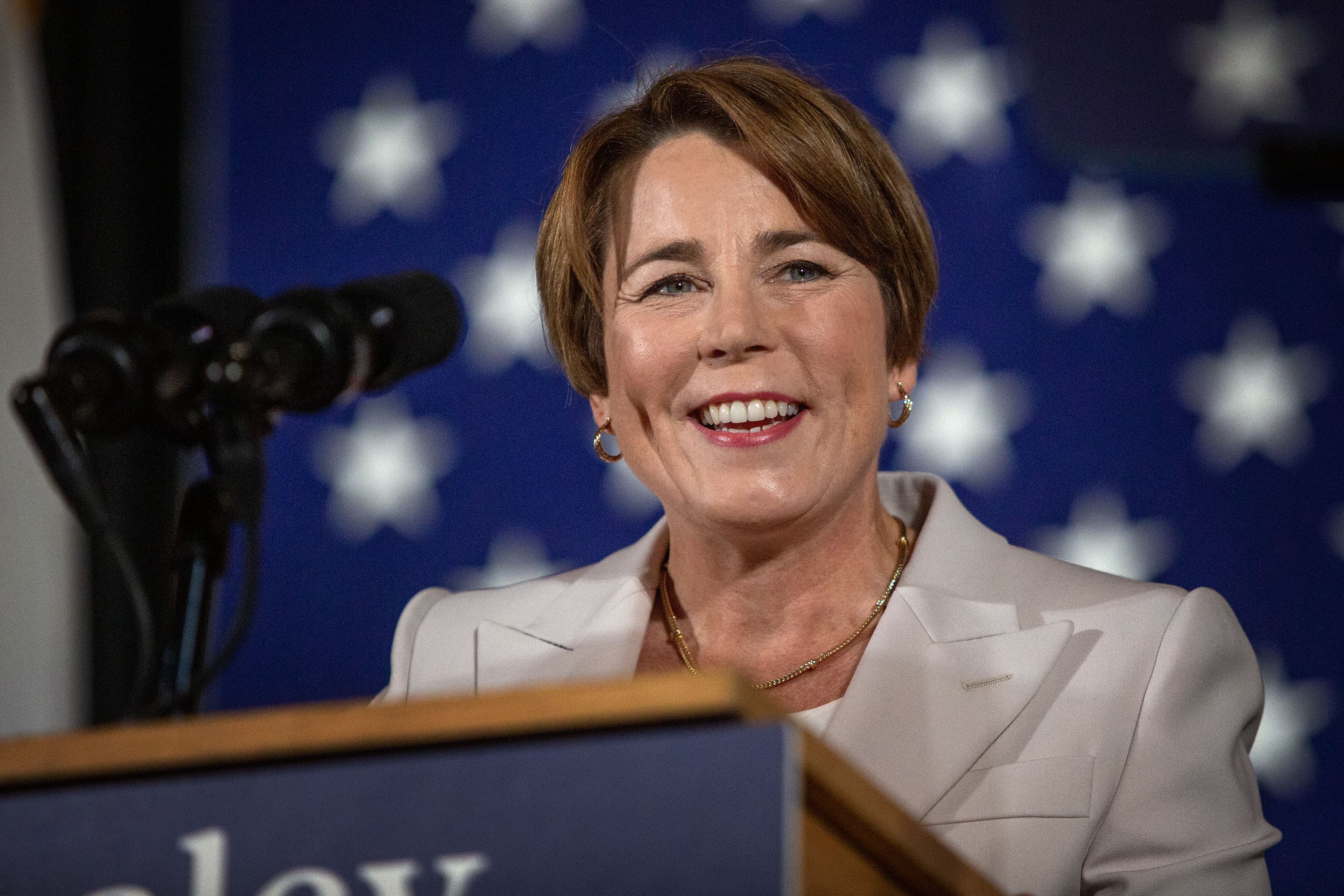
Then over in Massachusetts, a Republican candidate seeking to unseat Governor Maura Healey published a radio spot meant to depict what one of Healey’s “radio ads might sound like - if she was honest.”[]
And it features an AI-generated version of her voice saying:
“We have accomplished so much in our first term. We have one of the highest electricity rates in the nation, thanks to me for slapping on excessive fees to fund my climate agenda.” [_]
Right, she never said that, those are not her words, but again, the candidate’s campaign defended the video, arguing it was a parody, that it was just a creative and fun way to educate voters about his opponent. []
Massachusetts’s state-level races have had similar controversies too, with a state representative posting an AI-generated newspaper front page showing his opponent holding hands with Zohran Mamdani, clearly meant to make him look like a democratic socialist part of the radical left. []
And so you had the CEO of the advertising firm DSPolitical saying:
“Anytime generative AI is used to create messaging or imagery that is misleading, I hope we can all agree that’s a negative thing. When you’re trying to be deceitful or have something that never existed, that’s a big issue.”[]
But because the technology is so accessible and takes really no time to use, many think we will only see more and more of these ads as the midterms get closer.
And it will likely come from both sides, too, right, these latest high profile cases showed a lot of Republicans using AI, but Democratic candidates have used it, too.[]
And while some states have regulated political deepfakes, at least requiring ads to disclose if AI was used or restrict how often it can be used, you have people like Trump himself standing in the way of more widespread change. []
Because for one, he uses AI all the time to either attack opponents, promote his agenda, or just stoke political flames.
And reports have suggested Trump’s use of AI has worked to erode public trust, that people just don’t know where to go to find reliable information.
But his use of the technology also works as permission slip for other people in power, with New York Times tech reporter Tiffany Hsu (shoe) saying:
“If the president sets the political tone, then candidates could be less cautious about tapping the technology.”[]
“Their calculus might be that the public is becoming increasingly desensitized to A.I.’s reality distortion effect. They’re already being bombarded with fake influencers, fake celebrities, fake war reporting. What’s another fake politician?”
On top of that, just last week Trump introduced legislative framework that would limit states’ abilities to regulate AI, not just in politics, but at large.
Right, it essentially creates a single policy to be used on a national level so all states have the same guardrails when it comes to things like child safety, intellectual property, free speech, and data center development.
But many believe that whatever Trump proposes to regulate AI won’t go far enough to protect Americans, noting states are the ones actually leading the charge on reform, and a national policy could undo that work.[]
And going back to the midterms, Trump is not the only one trying to stop further AI regulation.
Right, millions of dollars are being poured into campaigns from pro-AI groups, with the Wall Street Journal reporting that AI companies have pledged $265 million for super PACs ahead of the midterms.[]
And a lot of focus is actually on a congressional race in New York, where millions has been spent in attack ads against candidate Alex Bores.
Right, he is not a super well known lawmaker, but he sponsored an AI safety bill in the state assembly, and so you have the Journal noting that his campaign:
“is shaping up as a test case for the super PAC trying to send a message: If a lawmaker pursues safety standards that aren’t supported by industry giants such as ChatGPT-maker OpenAI, it doesn’t matter how obscure they are, they will have to face the industry’s wrath.”
Though, the outlet also noted that these attack ads have actually worked to raise his profile as a candidate.
But at the same time, spending like this can work, right, crypto spent big bucks to get Trump in office, and that paid off.
So we will have to see where all this goes on every front here, right, on the actual use of AI in political ads, how that impacts campaigns, how voters react to this trend, if they are put off by it or if they get duped.
And then, how spending from AI companies influences races, too, right, can AI companies spend enough money to get who they want in office?





:max_bytes(150000):strip_icc():focal(749x0:751x2)/Paolo-Zampolli-Amanda-Ungaro-032026-b2208cb1ec4a4ac39cbb774deb90925f.jpg)
:max_bytes(150000):strip_icc():focal(749x0:751x2)/donald-trump-melania-Paolo-Zampolli-032026-3aa0ca3396e6403690d0171c07be9a2b.jpg)